Understanding Special Drawing Rights (SDRs) in Global Finance
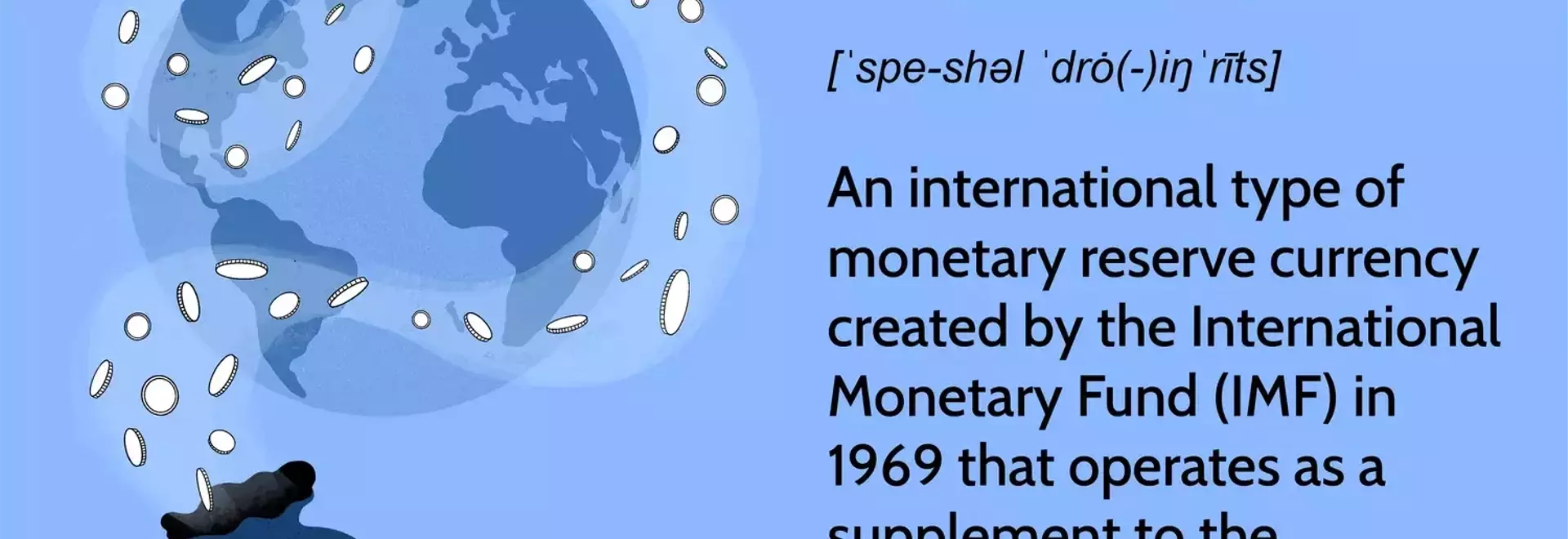
Special Drawing Rights (SDRs), established by the International Monetary Fund (IMF) in 1969, serve as a unique international reserve asset. Their primary purpose is to augment the existing reserves of member nations and bolster global financial stability. While not a currency in themselves, SDRs represent a potential claim on the freely convertible currencies of IMF members. This article explores the nature, function, and allocation of SDRs, highlighting their role in the intricate landscape of international finance.
SDRs were conceptualized to mitigate the limitations associated with relying predominantly on gold and the U.S. dollar for settling international financial transactions. Their valuation is intrinsically linked to a diverse basket of five prominent currencies: the U.S. dollar, the euro, the Chinese renminbi, the Japanese yen, and the British pound. This composite valuation mechanism ensures a broad and representative measure of global economic power. Furthermore, SDRs are integral to the IMF's lending activities and play a significant, albeit evolving, role in international monetary exchanges.
The composition of the SDR basket undergoes periodic reviews, typically every five years, to reflect shifts in the global economic landscape. The most recent recalibration occurred in August 2022. Historically, SDRs were intended to form a cornerstone of international reserves, with gold's significance gradually diminishing. This was largely driven by the recognition that the supply of the U.S. dollar and gold, the then-dominant reserve assets, was insufficient to sustain the burgeoning volume of global trade and associated financial flows. Consequently, IMF member countries collectively endorsed the creation of an international reserve asset under the IMF's aegis.
Beyond their role as a supplementary reserve asset, SDRs function as the IMF's internal accounting unit. Their value, expressed in U.S. dollars, is derived from the weighted average of the five constituent currencies. However, the importance of SDRs as a global reserve currency saw a decline following the collapse of the Bretton Woods system in 1973, which ushered in an era of floating exchange rates. This shift, coupled with the rapid expansion of international capital markets, allowed creditworthy governments to access funds more readily, leading to substantial growth in their international reserves. These developments collectively lessened the initial prominence of SDRs.
The allocation of SDRs to IMF member countries is directly proportional to their respective quota shares within the organization. A nation's economic strength and contribution to the IMF determine its quota shares, which, in turn, influence its voting power and SDR allocation. For instance, countries with robust economies hold larger quota shares and consequently receive a greater allocation of SDRs. Emerging markets and developing economies, including low-income countries, collectively account for a significant portion of SDR shares, underscoring their growing influence in the global financial system.
The IMF's guidelines stipulate that general allocations of SDRs are made when there is a demonstrated long-term global need to supplement existing reserve assets. Such allocations require an 85% majority approval of the total voting power within the SDR Department. A notable instance of a large-scale SDR allocation occurred on August 2, 2021, when the IMF distributed $650 billion in SDRs. This historic allocation aimed to bolster global liquidity during the COVID-19 pandemic, enabling member countries to navigate economic challenges. Following an allocation, countries have the flexibility to either retain their SDRs as part of their foreign exchange reserves, sell them, or utilize them for various purposes. These uses include exchanging SDRs for freely usable currencies, repaying loans, fulfilling financial obligations, or pledging them as collateral.
To be included in the SDR basket, currencies must meet specific criteria established in 2000. These criteria stipulate that the currencies must belong to IMF members or monetary unions whose exports demonstrate the largest value over a five-year period and are deemed by the IMF to be "freely usable." A freely usable currency is characterized by its widespread use in international transactions and its active trading in major foreign exchange markets. The determination of a currency's free usability is based on several metrics, including its share in global reserve holdings, its use in denominating international debt securities, the volume of its transactions in foreign exchange markets, and its role in cross-border payments and trade finance.
SDRs are not considered sovereign currencies or direct claims on IMF assets. Rather, they represent a potential claim on the freely usable currencies held by IMF member states. These freely usable currencies, as defined by the Articles of Agreement, are those actively used in international transactions and frequently traded in foreign exchange markets. Countries possessing SDRs can convert them into freely usable currencies through either voluntary agreements or under the IMF's directive. Furthermore, IMF member nations can access SDRs from reserves at preferential interest rates, primarily to stabilize their balance of payments and foster favorable economic conditions.
The interest rate applicable to SDRs, known as the SDRi, forms the basis for calculating interest on loans extended by the IMF to member countries. Conversely, the SDRi also determines the interest paid to member countries for their remunerated creditor positions within the IMF. Additionally, it applies to the interest earned by member countries on their SDR holdings and the charges levied on their SDR allocations. The SDRi is recalibrated weekly, taking into account the interest rates on short-term government debts, with a floor of five basis points. The current SDRi values are publicly available on the IMF's official website.
In essence, Special Drawing Rights, initiated by the IMF in 1969, were designed to augment the reserve assets of member nations, addressing the historical over-reliance on gold and the U.S. dollar. These interest-bearing reserve instruments are not currencies themselves but are pivotal in bolstering global financial liquidity. Their value is derived from a composite basket of five leading global currencies, and they are distributed to nations based on their IMF quota shares. SDRs offer flexibility, allowing countries to exchange them or integrate them into their foreign reserves, as exemplified by the IMF's substantial 2021 allocation to aid pandemic recovery. The daily recalculation of their value ensures that SDRs remain responsive to ongoing shifts in currency markets.