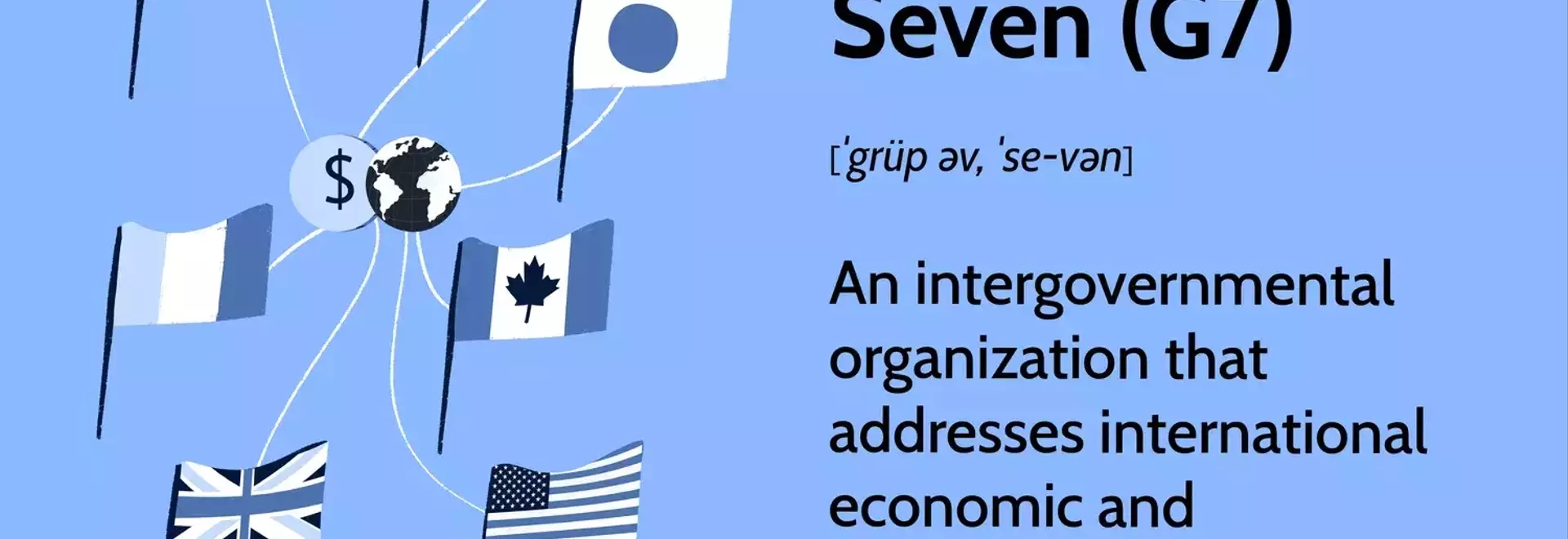
The Group of Seven (G7): Global Economic Influence and Evolution
The Group of Seven (G7) serves as a pivotal forum for the world's most economically advanced nations to confront and coordinate responses to pressing global economic and monetary challenges. Comprising Canada, France, Germany, Italy, Japan, the United Kingdom, and the United States, this non-legislative body plays a crucial role in shaping international policy through dialogue and collective action. Its history, marked by periods of expansion and contraction, reflects a continuous adaptation to the evolving global landscape, striving for economic stability and addressing critical issues such as financial crises and climate change.
The G7’s influence extends beyond mere discussion, driving significant initiatives aimed at fostering global economic stability and addressing humanitarian concerns. From spearheading debt relief programs for developing nations to establishing forums for managing international financial systems, the G7 demonstrates its commitment to collective problem-solving. Despite its non-legislative nature, the resolutions and initiatives adopted by the G7 often guide the policies and actions of its member states, underscoring its enduring impact on global governance and economic cooperation.
The G7's Foundation and Operational Framework
The Group of Seven (G7) is an assembly of leaders from seven highly industrialized nations: the United States, the United Kingdom, France, Germany, Italy, Canada, and Japan. This informal consortium convenes regularly to engage in discussions concerning international economic and financial matters. While the G7 does not possess legislative authority to enforce laws in member countries, it functions as a crucial platform for establishing initiatives and commitments that its members collectively agree to uphold. The presidency of the G7 rotates annually among its member states, ensuring diverse leadership and perspectives.
The G7's primary objective is to tackle global economic issues, including financial crises, the stability of monetary systems, and significant worldwide challenges such as energy shortages. The group has historically initiated projects aimed at alleviating debt burdens for developing countries, exemplified by the 1996 program with the World Bank that led to debt cancellation for 42 impoverished nations by 2005. Additionally, in 1999, the G7 established the Financial Stability Board (FSB), composed of leading national financial authorities and central bankers, to enhance the management of the international monetary system. Through these actions, the G7 demonstrates its capacity to mobilize collective resources and influence global economic policies.
Historical Trajectory and Global Influence of the G7
The G7 originated in the early 1970s, initially involving leaders from the U.S., U.K., France, West Germany, and Japan, who gathered to discuss economic recession and the oil crisis. This informal gathering evolved into a more structured forum in 1975 when French President Valéry Giscard d'Estaing invited these nations, along with Italy, to Rambouillet for focused discussions on global oil issues, with heads of government joining finance ministers. Canada was subsequently invited in 1976, solidifying the group as the G7. Its composition later expanded to include Russia in 1998, forming the G8, a change that reflected the evolving geopolitical landscape following the Soviet Union's transition towards a market economy. However, Russia's membership was suspended in 2014 following its annexation of Crimea, reverting the group to its original G7 format.
The G7's influence has been dynamically shaped by global economic shifts, particularly with the rise of developing nations. The emergence of the Group of 20 (G20) in 1999, which includes all G7 members alongside 12 additional countries and the European Union, marked a significant development. The G20 was formed to address the growing importance of emerging economies in global financial discussions. As countries like China, Brazil, India, Mexico, and South Africa exert greater economic influence, the G20 has increasingly taken on a prominent role in global economic governance, sometimes overshadowing the G7's historical eminence. Despite this, the G7 continues to address critical global challenges, as evidenced by the 2021 summit's focus on the coronavirus pandemic and climate change, where members committed to distributing vaccine doses and achieving net-zero carbon emissions by 2050.