Understanding Financial Deficits: Dynamics, Implications, and Management
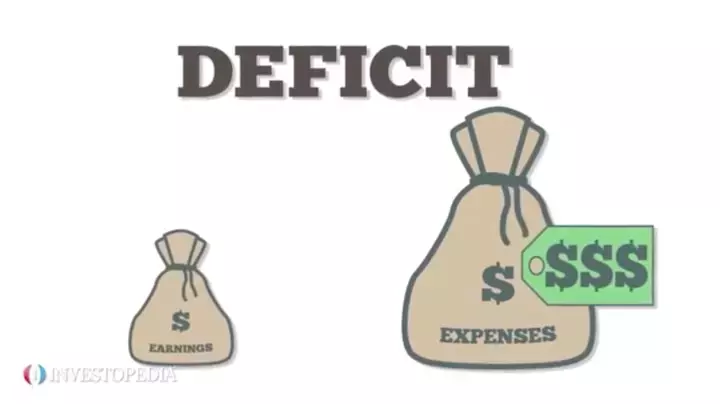
A deficit in finance signifies a shortfall where outgoings surpass incomings. This imbalance can manifest across personal, corporate, or governmental finances when expenditures exceed revenues over a specific period. While often viewed as undesirable, deficits are not always accidental; they can be a deliberate fiscal strategy to foster economic development during challenging times. Nonetheless, persistently high deficits can accumulate national debt, devalue currency, and impede economic progress, requiring careful oversight and consideration for sustained financial health.
Understanding the Concept and Consequences of Financial Shortfalls
In the world of finance, a deficit represents a negative balance, emerging when money flowing out surpasses money flowing in. This state can be observed at various levels: for an individual, it means spending more than earned; for a business, costs outweigh profits; and for a government, expenditures exceed tax revenues. Deficits are fundamentally the inverse of surpluses and indicate a financial imbalance that typically necessitates borrowing.
The renowned British economist, John Maynard Keynes, posited that governments could strategically utilize fiscal deficits to inject capital into the economy. By increasing spending on public goods and services during periods of economic contraction, governments can stimulate demand, create employment opportunities, and help steer a nation out of recession. This perspective highlights deficits as a potential tool for economic stabilization and growth, rather than solely a sign of financial distress.
However, the long-term implications of sustained deficits are a subject of considerable debate. Critics argue that persistent governmental deficits lead to an accumulation of national debt. The burden of servicing this debt consumes resources that could otherwise be allocated to essential public services like education, healthcare, or infrastructure development. Similarly, persistent trade deficits, where a nation imports more than it exports, can lead to a depreciation of the national currency and a potential loss of domestic jobs as demand shifts towards foreign goods and services.
Conversely, proponents of trade deficits suggest that they allow consumers access to a wider array of goods and can incentivize domestic industries to become more competitive on a global scale. Yet, the consensus remains that while short-term deficits might offer strategic advantages, their continued existence without effective management can pose significant risks to a nation's economic stability and future prosperity.
For instance, the United States, as reported by the Congressional Budget Office (CBO) in September 2024, faced a federal budget deficit of $1.9 trillion, marking a substantial increase from the previous year. The CBO further projected that the national debt held by the public would climb to 99% of the Gross Domestic Product (GDP) by the end of 2024, with expectations of further increases to 101.6% by 2025 and 122.4% by 2034. These figures underscore the ongoing challenge of managing large-scale governmental deficits and their potential long-term impact on the nation's financial landscape.
The Long-Term View on Fiscal Health
This discussion on deficits prompts us to reflect on the broader implications for financial prudence, whether for nations or individuals. While temporary financial shortfalls can serve as strategic levers for growth or recovery, especially during economic downturns, their prolonged existence merits careful scrutiny. The key takeaway is the importance of a balanced approach. Governments might strategically incur deficits to fund vital public works or stabilize employment during recessions, but such decisions must be weighed against the escalating national debt and its servicing costs. For individuals, understanding and managing personal deficits means striving to live within one's means and prioritizing savings for a secure future. Ultimately, both governmental bodies and individuals must seek a sustainable path, where deficits are either a temporary necessity or a calculated risk that eventually leads back to financial equilibrium and prosperity.