Uncertain Future for ICE Presence at Airports Post-TSA Pay Resolution
News

Uncertain Future for ICE Presence at Airports Post-TSA Pay Resolution

authorBy Carl Bernstein
DateMar 30, 2026
Read Time3 min
This article examines the ongoing situation at U.S. airports, specifically focusing on the role of Immigration and Customs Enforcement (ICE) agents amidst the financial instability faced by Transportation Security Administration (TSA) workers due to a government shutdown. It delves into the uncertainty surrounding ICE's continued presence and the efforts to resolve the pay dispute for TSA staff, highlighting the broader implications for airport security and traveler experience.

Navigating Airport Security: The Lingering Question of ICE Deployment Amidst TSA's Financial Straits

The Persistent Role of ICE Officers at Nation's Airports

Despite impending paychecks for Transportation Security Administration (TSA) personnel, the deployment of Immigration and Customs Enforcement (ICE) agents at American airports might continue. White House border official Tom Homan indicated this possibility, noting that the decision on ICE's withdrawal is contingent upon the number of TSA employees who return to their posts and those who might have permanently left their positions.

Addressing the Financial Crisis for TSA Employees

Homan conveyed that discussions with Department of Homeland Security Secretary Markwayne Mullin have led to a strategy for disbursing TSA workers' salaries, with payments potentially arriving as early as Monday or Tuesday. He underscored the critical need for this resolution, acknowledging the severe financial challenges, such as difficulties with food and rent, faced by these essential workers.

Government Efforts to Alleviate Pay Delays

A recent social media update from the Department of Homeland Security (DHS) corroborated that the process of compensating TSA staff had commenced, with expectations for payments to reach them soon. This announcement followed a presidential directive to utilize existing funds for worker compensation, even as congressional negotiations for long-term DHS funding remain unresolved amid a prolonged government shutdown.

ICE's Interim Support for Airport Security Operations

For several weeks, following a presidential order, ICE agents have been actively supporting TSA operations at airports nationwide. Their responsibilities include verifying identification and filling other security gaps, enabling the remaining TSA staff to concentrate on more specialized tasks like operating baggage screening equipment, according to Homan.

Impact of Staff Shortages on Traveler Experience and Recovery Efforts

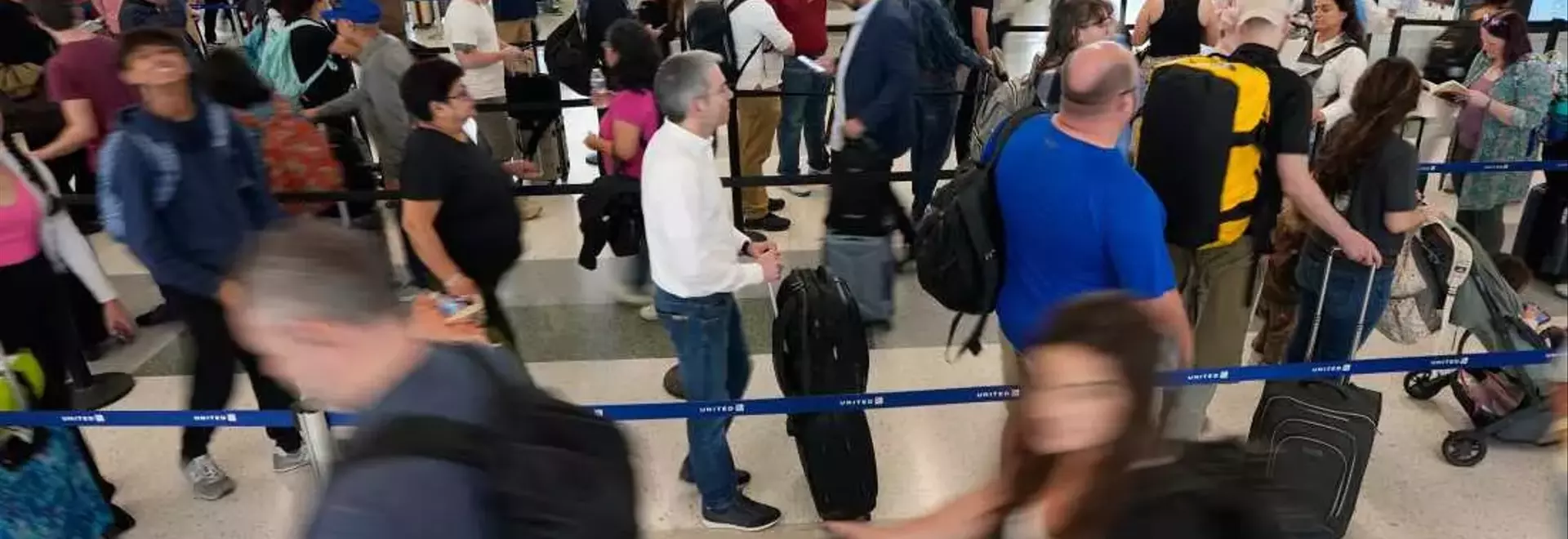
The government shutdown led to significant disruptions, with nearly 50,000 transportation security workers enduring prolonged periods without pay. The acting administrator of TSA, Ha Nguyen McNeill, reported that over 480 employees had resigned, and some airports experienced up to a 40% absence rate among staff, resulting in extensive security checkpoint delays. Homan, however, observed a reduction in wait times in certain locations, attributing this improvement to the deployment of additional agents.

Continued Challenges and Congressional Standoff for DHS Funding

While some relief in wait times has been noted, particularly in Houston, where lines were considerably shorter, the issue of permanent funding for the Department of Homeland Security persists. Congressional talks are currently stalled, with lawmakers on recess, leaving the long-term financial stability for DHS and its employees in limbo until their return in April.

More Articles
News
Navigating the Evolving Job Market: Challenges and Strategies for Young Professionals
The current job market presents significant hurdles for recent graduates and young job seekers. This article explores the difficulties faced by this demographic and offers insights from an economist and college students on effective strategies for securing employment in a rapidly changing professional landscape.
By Ann CurryMar 29, 2026
News
U.S. Bike Manufacturer Seeks Tariffs to Boost Domestic Production
Brian Riley, CEO of Guardian Bike Company, is championing the cause of American-made children's bicycles and advocating for increased tariffs on foreign competitors. His company, based in Seymour, Indiana, employs advanced manufacturing techniques to produce bikes domestically, aiming to revitalize local industry and establish a robust U.S. manufacturing base. This initiative faces opposition from importers concerned about rising prices for consumers.
By Carl BernsteinMar 29, 2026
News
Squatters' Resilience in Seoul's Affluent Gangnam
In Seoul's prosperous Gangnam district, a stark contrast exists between gleaming skyscrapers and Guryong Village, a shantytown where residents like 85-year-old Lee Chang-wol face eviction. This report sheds light on the economic disparity and the struggles of the urban poor in South Korea as the city government plans to redevelop the land, offering minimal compensation.
By Mona ChalabiMar 29, 2026
News
USMNT's World Cup Prospects: Crucial Friendlies Against European Giants
With the FIFA World Cup merely two months away, the U.S. Men's National Team faces heightened expectations and pressure. Two pivotal international friendlies against top European contenders, Belgium and Portugal, will serve as a crucial litmus test for the team's capabilities and offer a glimpse into their potential performance in the upcoming World Cup. These matches are not just preparation; they are a final proving ground for players vying for a spot on the coveted World Cup roster.
By Katty KayMar 28, 2026
News
Navigating Airport Security: Strategies for Flight Delays and Rebooking
This article offers crucial advice for air travelers facing extended TSA lines and potential flight disruptions, a common issue exacerbated by government shutdowns. It provides practical strategies for checking airport wait times, finding alternative security lines, and effectively rebooking flights through airline apps or customer service. The piece also highlights varying airline rebooking policies and suggests considering alternative transportation or travel insurance when flights are severely impacted. The aim is to equip passengers with the knowledge to manage unforeseen airport challenges and minimize travel stress.
By Ann CurryMar 28, 2026