U.S. Bike Manufacturer Seeks Tariffs to Boost Domestic Production
Pedaling Towards Protection: A Domestic Bike Manufacturer's Fight for Fair Trade
The Genesis of Innovation: A Personal Story Inspiring a Safer Bicycle Brake
Brian Riley's foray into the bicycle industry began unexpectedly, rooted in a traumatic incident involving his grandfather. Two decades ago, a near-fatal cycling accident, caused by the panic-induced squeezing of a single front brake, prompted Riley to conceive a safer alternative. This personal hardship became the catalyst for the development of SureStop, an innovative braking system designed to simultaneously engage both front and rear wheels with a single lever, mimicking the intuitive braking of an automobile. This invention laid the groundwork for his future endeavors in bike manufacturing.
The Vision to Manufacture Domestically: Challenging a Foreign-Dominated Market
Upon attempting to market his groundbreaking brake system, Riley discovered a landscape dominated by overseas manufacturers, with most bicycles sold in the United States being imports. This realization ignited his ambition to reverse the trend by establishing a bicycle factory on American soil. His goal was to produce "Made in the USA" bikes and to seek government intervention through tariffs to bolster domestic production against international rivals. This move sets the stage for a critical examination of current trade policies and their impact on local industries, drawing immediate contention from established bicycle retailers and importers.
Strategic Location Selection: Seymour, Indiana as a Hub for Manufacturing Excellence
After thorough research into global bicycle manufacturing practices, Riley chose Seymour, Indiana, as the ideal location for the Guardian Bike Company. This town, nestled between major logistical centers, offered strategic advantages including excellent transportation networks and a local steel supply. Crucially, Seymour's rich manufacturing heritage meant a readily available skilled workforce, with factory jobs comprising a significant portion of local employment. This environment provided the perfect foundation for Guardian's ambition to build bikes from the ground up in the U.S.
Embracing Automation: Advanced Technology Driving Cost-Effectiveness and Efficiency
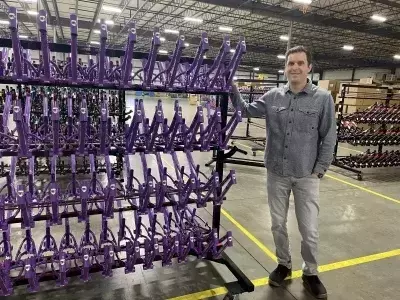
Guardian Bike Company initially began by assembling bikes from imported components. However, the company soon transitioned to full domestic production, crafting bicycles entirely within the United States. To compete with the lower labor costs of foreign competitors, Guardian invested heavily in automation. The factory now utilizes robots and high-powered lasers to streamline production processes, drastically increasing efficiency and reducing the need for extensive manual labor. This technological integration allows Guardian to maintain competitive pricing while offering attractive wages and benefits to its employees, demonstrating a modern approach to domestic manufacturing.
Pricing and Market Dynamics: Guardian's Value Proposition Amidst Competitive Pressures
Guardian bikes, primarily aimed at children, are sold directly to consumers, bypassing traditional retail markups. Despite this, their price point, ranging from $150 to $400, is significantly higher than many imported children's bikes found in large retail chains. Riley is actively seeking to mitigate this price disparity by advocating for the extension of existing steel and aluminum tariffs to cover foreign-made bikes and their components. This strategic move is intended to create a more favorable economic environment for domestic producers, though it has sparked considerable debate within the industry regarding consumer affordability and market accessibility.
Industry Backlash: The Wider Impact of Proposed Tariffs on the Bicycle Market
Guardian's request for higher tariffs has met with strong opposition from a broad coalition of U.S. bicycle retailers and importers. Critics argue that such tariffs would inevitably lead to increased consumer prices, making bicycles less accessible for many families, especially in a market already experiencing declining birth rates. Industry representatives contend that discouraging bicycle purchases at a young age could have long-term detrimental effects on the sport and future customer engagement. The debate underscores the complex interplay between protecting domestic industries and ensuring consumer welfare and market vitality.
The National Security Argument: Manufacturing Expertise as a Strategic Asset
In response to the skepticism regarding the national security implications of children's bicycles, Riley emphasizes that the true value lies not in the bikes themselves, but in the manufacturing capabilities fostered by their production. He argues that maintaining a domestic industrial base, with inherent design and production expertise, is crucial for national security preparedness. This perspective highlights the broader economic and strategic benefits of revitalizing American manufacturing, suggesting that the skills and infrastructure developed in making consumer goods could be repurposed for critical national needs during emergencies.
Local Economic Revitalization: Guardian's Positive Impact on Seymour, Indiana
Guardian Bike Company's growth has profoundly revitalized Seymour, Indiana. Operating out of former industrial spaces, the company has created about 250 jobs, with plans for further expansion. Riley proudly points to the positive ripple effect on the community, including increased local commerce and a renewed sense of economic vibrancy. The company's success is not only measured in bike sales but also in its ability to generate spin-off businesses, such as a local plastics manufacturer now producing training wheels for Guardian. This demonstrates how a commitment to domestic production can foster a thriving local economy and community spirit.
Future Prospects: Navigating Growth and Trade Policy Challenges
With an ambitious sales target of half a million bikes this year, Guardian Bike Company's future appears promising, supported by strong customer loyalty and positive reviews. While Riley believes the company's success isn't solely dependent on additional tariffs, he acknowledges that such measures would accelerate growth and encourage more U.S. companies to manufacture domestically. The fundamental question remains whether Guardian can continue to thrive independently or if it requires protective tariffs to maintain its competitive edge and further its mission of building bikes in the USA, symbolizing a larger national discussion on industrial policy and global trade.