Subway Ride Inspires 'Waiting for Godot' Set Design
The recent Broadway revival of Samuel Beckett's 'Waiting for Godot' challenged traditional interpretations with its bold and minimalist set design. Production designer Soutra Gilmour, along with director Jamie Lloyd and stars Alex Winter and Keanu Reeves, reimagined the iconic setting, drawing inspiration from an unconventional source: a New York City subway ride. This innovative approach transformed the stage into a captivating, tunnel-like environment, creating a powerful visual metaphor for the play's enduring themes of waiting, existentialism, and the human condition. The decision to deviate from the play's typical pastoral imagery sparked conversations about artistic interpretation and the boundaries of theatrical staging, ultimately enriching the audience's engagement with this classic work.
Soutra Gilmour's vision for the 'Waiting for Godot' revival set was deeply influenced by a profound observation during a subway journey. While working on 'Sunset Blvd' with director Jamie Lloyd, Gilmour was already contemplating their next collaboration. A chance encounter with a homeless individual in the subway, meticulously performing a nightly ritual of changing clothes, left a lasting impression. This act of marking the passage of time and creating a sense of purpose within a harsh environment resonated with the core themes of Beckett's play. This subway experience sparked a series of creative questions for Gilmour, pushing her to consider how contemporary urban spaces could convey the sense of a 'country road' or an 'Irish idyll' in a non-literal way, ultimately leading to the concept of a concrete, tunnel-like structure.
A Subway Epiphany: Redefining Godot's Setting
Soutra Gilmour's innovative concept for the set of "Waiting for Godot" arose from an unexpected moment during a New York subway commute. While still engrossed in rehearsals for "Sunset Blvd" alongside director Jamie Lloyd, the duo had already begun contemplating their next theatrical endeavor: a fresh take on Samuel Beckett's iconic "Waiting for Godot." Gilmour recounted observing a homeless man on the subway who, despite his circumstances, engaged in a deliberate ritual of changing into an "all-black outfit" for the night. This poignant act of demarcation—marking the end of one day and the beginning of another—deeply moved Gilmour, prompting her to connect it to the central theme of waiting and the human need to assign purpose to time, a concept central to Beckett's work. This subway observation became the catalyst for re-evaluating the play's traditional setting, inspiring her to explore alternative visual metaphors that could resonate with a contemporary audience while staying true to the play's profound philosophical underpinnings. The designer’s personal encounter subtly shifted the aesthetic direction of the production, moving it away from literal interpretations and towards a more symbolic, immersive experience.
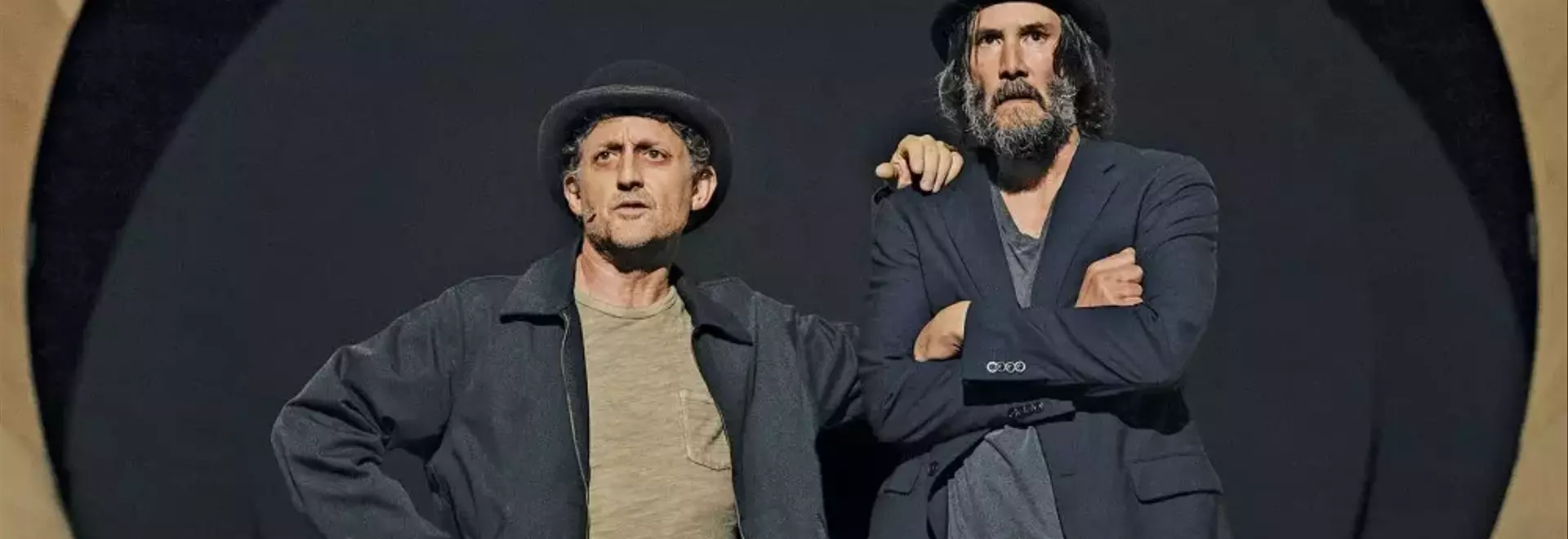
The creative journey for the "Waiting for Godot" set diverged significantly from its predecessors, moving beyond the familiar park bench and solitary tree. Instead, Gilmour envisioned a monumental concrete tunnel, an abstract sculpture that commanded attention, yet was devoid of overt realism. This minimalist design, described by director Jamie Lloyd as "not literal" but rather "our version of that," aimed to challenge the audience's preconceptions and foster deeper engagement. The scale of this hollow, circular structure was such that the actors, Alex Winter and Keanu Reeves, appeared dwarfed within its embrace, creating a compelling spatial dynamic. Gilmour noted that the set was deliberately crafted to evoke a sense of simultaneous confinement and exposure, a "weird juxtaposition" where the structure both "holds you and yet it also traps you." The actors' dynamic interaction with this imposing void, exploring it as a "hamster wheel" of existence, underscored the play's themes of entrapment and the cyclical nature of waiting. Even the Boy character's costume, a cream hoodie, was thoughtfully chosen to visually link him with the starkness of the environment, further blurring the lines between character and space and inviting diverse interpretations from the audience, who often perceived the tunnel as the inside of a tree or another profound, enclosed space.
Architectural Metaphor: The Tunnel as a Stage for Existence
The set of the "Waiting for Godot" revival, conceptualized by Soutra Gilmour, provocatively moved beyond conventional stage aesthetics, becoming a powerful architectural metaphor rather than a mere backdrop. Departing from the play's traditional depictions of a rural road, a tree, and a bench, Gilmour's design introduced a imposing concrete tunnel—a colossal, abstract sculpture that immediately captured attention. This audacious choice was rooted in Gilmour's contemplation of how to represent the play's inherent themes of existential uncertainty and the passage of time in a contemporary context. The tunnel, with its vast emptiness, symbolized a void, challenging both the actors and the audience to confront the ambiguity of their surroundings. This stark, non-naturalistic setting underscored the director Jamie Lloyd's philosophy that a revival should offer a fresh perspective, questioning the purpose of replicating past productions. The abstract nature of the set, while initially prompting questions about its literal meaning, ultimately served to amplify the play's universal concerns, allowing the characters' plight of waiting to resonate more deeply within this stark, man-made landscape, transforming the stage into a canvas for profound philosophical inquiry.
Gilmour's decision to forgo a naturalistic setting for "Waiting for Godot" was a deliberate artistic statement, aiming to strip away familiar comfort and amplify the play's core themes. The absence of a traditional tree or bench was not an oversight but a conscious choice, resulting in a large, hollow, circular structure that dominated the stage. This "monstrous" yet "soft" concrete tunnel created a striking visual juxtaposition, simultaneously framing and exposing the actors. The sheer scale of the sculpture made the characters appear small and vulnerable within its expanse, highlighting their insignificance against the vastness of their predicament. Actors Alex Winter and Keanu Reeves masterfully utilized this unique space, interacting with it in ways that suggested both entrapment and the endless cycle of their waiting. Their physical engagement, moving around the structure and exploring its confines, evoked images of a "hamster wheel," powerfully conveying the human experience of feeling trapped and searching for purpose. Even the costume for the Boy, a simple cream hoodie, was designed to blend him with the space, reinforcing the idea of an intrinsic connection between the characters and their environment, and encouraging the audience to interpret the set's multifaceted symbolism, from an abstract tree interior to a more generalized symbol of human isolation and resilience.