Understanding the 'Too Big to Fail' Phenomenon in the Economy
Finance

Understanding the 'Too Big to Fail' Phenomenon in the Economy

authorBy Suze Orman
DateApr 23, 2026
Read Time2 min

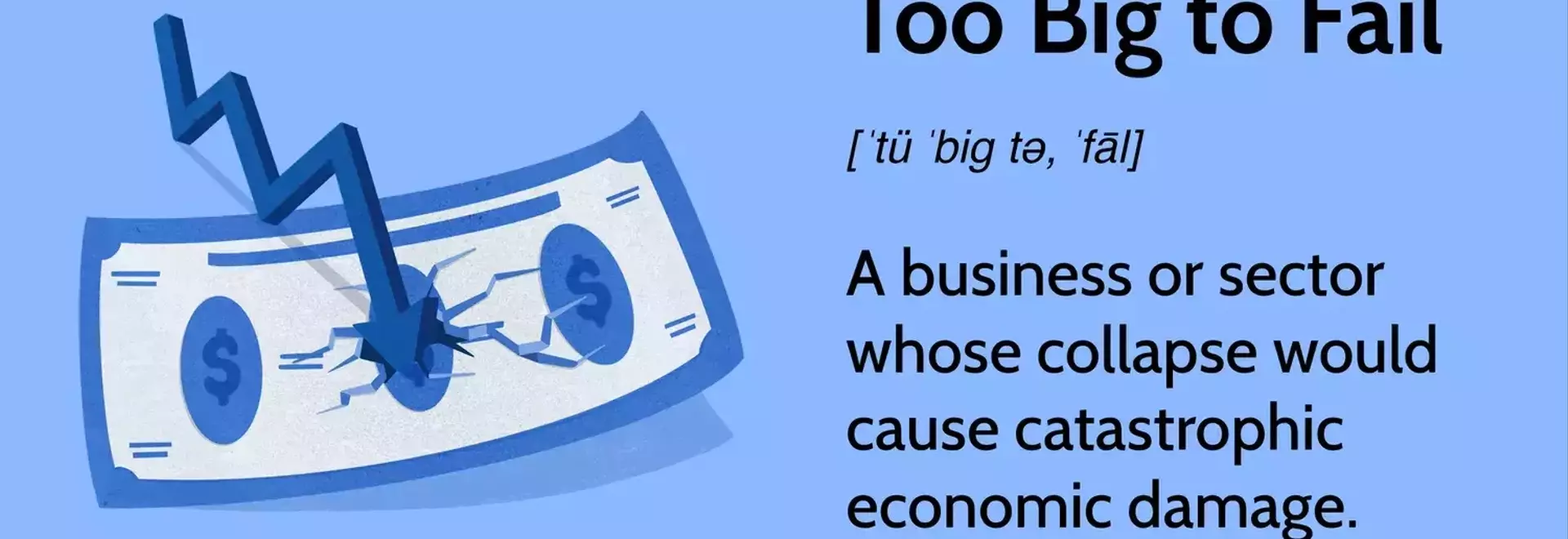
The concept of 'Too Big to Fail' describes businesses or industries so deeply intertwined with the financial system that their collapse would trigger widespread economic catastrophe. This idea came to the forefront during the 2007-2008 financial crisis when governments intervened to rescue numerous banks and institutions, demonstrating a willingness to prevent systemic failure. Subsequently, legislative measures such as the Dodd-Frank Act were introduced, aiming to curtail the uncontrolled expansion of banking entities and mitigate future risks.

During the 2007-2008 financial crisis, the failure of key institutions led to significant government intervention. The U.S. government implemented the Troubled Asset Relief Program (TARP), a $700 billion initiative designed to stabilize the financial system by acquiring distressed assets. This period prompted a reevaluation of financial regulations, resulting in the Dodd-Frank Wall Street Reform and Consumer Protection Act in 2010. Despite these reforms, major banks have expanded, maintaining considerable influence and contributing to ongoing systemic risks within the financial landscape. Historically, similar concerns led to the establishment of the Federal Deposit Insurance Corp. (FDIC) in the 1930s to safeguard bank deposits and restore public confidence. Current regulations focus on strengthening the stability of the financial system, but critics argue that these measures may hinder the competitiveness of American banks and disproportionately affect smaller institutions.

The policy of intervening to prevent the collapse of 'Too Big to Fail' institutions has been met with both support and criticism. While proponents argue that such measures are essential to prevent broader economic harm, detractors contend that they can create moral hazard, encouraging large institutions to take on excessive risks. Furthermore, strict regulations can impact the operational agility of financial firms and impose burdens on smaller banks that were not responsible for past crises. This ongoing debate highlights the delicate balance between ensuring financial stability and fostering a competitive, equitable market environment.

The 'Too Big to Fail' phenomenon serves as a powerful reminder of the interconnectedness of our global financial system and the profound responsibility of institutions and policymakers. Striking the right balance between robust regulation and fostering innovation is paramount. By continually adapting and strengthening oversight, we can collectively work towards a financial future that is both resilient and promotes equitable growth for all.

More Articles
Finance
The Role and Impact of Economists in Shaping Global Strategies
Economists are experts who analyze resource allocation and production to forecast trends and inform policy. They are crucial in influencing government and corporate strategies, requiring advanced degrees and specialized knowledge. With a projected 5% growth in demand over the next decade, a career in economics offers significant opportunities in various sectors, including finance and government.
By Mariana MazzucatoApr 23, 2026
Finance
Understanding Condominium Ownership: Pros, Cons, and Key Considerations
This article explores the concept of condominium ownership, detailing its advantages and disadvantages. It covers the unique ownership structure, management by condominium associations, and essential considerations for prospective buyers. The article also differentiates condos from apartments and addresses common questions regarding costs and assessments.
By Michele FerreroApr 23, 2026
Finance
Preferred Shares of NexPoint Diversified REIT: Income and Appreciation Potential
NexPoint Diversified Real Estate Trust's Series A preferred shares (NXDT.PR.A) have seen a decline in early 2026, influenced by rising long-term interest rates and shifting expectations for Federal Reserve rate cuts. This downturn occurs despite a strong performance in NXDT common stock, which has improved preferred equity coverage. The author suggests this disparity presents a buying opportunity, particularly for investors with a high tolerance for risk seeking turnaround potential. However, preferred dividends are not currently covered by adjusted FFO, though a significant book value discount provides a safety margin. The primary risk remains capital losses if the turnaround efforts are unsuccessful.
By Strive MasiyiwaApr 23, 2026
Finance
Marvell Technology's Data Center Dominance and AI-Driven Growth
Marvell Technology has seen its stock soar by approximately 90% in a single quarter, fueled by accelerated data center revenue and robust AI demand from hyperscalers. The company's data center segment is projected to exceed $6 billion in FY26, contributing significantly to total revenue. Custom silicon is also expanding rapidly, expected to reach $1.5 billion in FY26 and potentially double by FY28, driven by strong hyperscaler demand. Overall revenue is forecast to grow from $10.8 billion in FY27 to roughly $15 billion by FY28, with notable improvements in gross and operating margins.
By Morgan HouselApr 23, 2026
Finance
Understanding Captive Insurance Companies: Benefits, Drawbacks, and Real-World Examples
This article explores captive insurance companies, their definition, functioning, tax implications, and real-world examples. It highlights the benefits such as cost savings and tailored coverage, as well as potential drawbacks like overhead costs and compliance issues. The article also distinguishes captive insurers from mutual insurance companies and captive agents.
By Mariana MazzucatoApr 23, 2026