Understanding Mass Production: History, Advantages, and Disadvantages
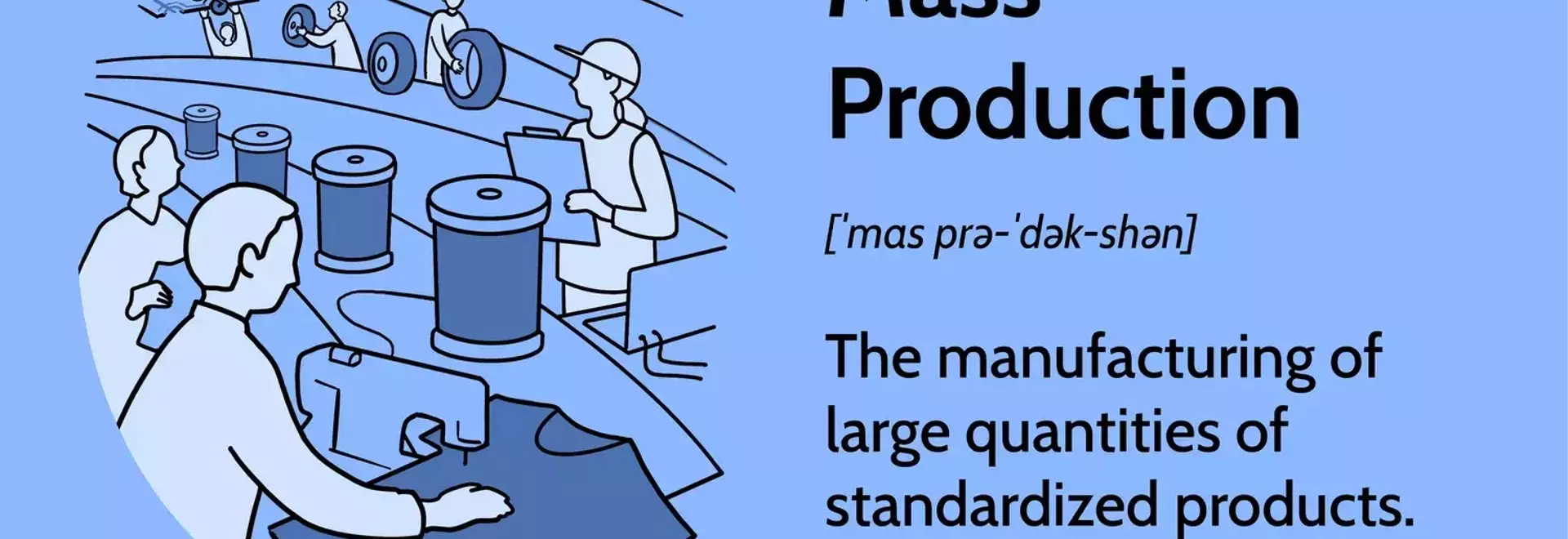
Mass production, a cornerstone of modern industry, focuses on the efficient creation of large volumes of identical products. This manufacturing approach leverages standardized processes, often incorporating assembly lines and advanced automation technologies. It aims to satisfy widespread consumer demand by delivering goods at a reduced cost, making them more accessible to the general public. Historically, figures like Henry Ford championed this method, fundamentally transforming various sectors from automotive to consumer goods. Despite its undeniable benefits in cost-effectiveness and efficiency, mass production also presents challenges, including the high initial capital investment required and the potential for worker disengagement due to repetitive tasks.
The Evolution and Impact of Large-Scale Manufacturing
The concept of mass production, often referred to as flow production or serial production, centers on the systematic and extensive creation of uniform products. This manufacturing philosophy relies heavily on mechanization to achieve high output volumes, meticulous organization of material flow, rigorous quality control standards, and a finely tuned division of labor. Through automation and specialized equipment, manufacturers can produce goods not only more efficiently but also at a lower cost, thereby passing savings on to consumers. Many everyday items, from clothing and electronics to vehicles and processed foods, owe their affordability and widespread availability to these techniques.
The roots of mass production can be traced back to the burgeoning demand for standardized military supplies. However, it was Henry Ford, the visionary founder of Ford Motor Co., who truly revolutionized the landscape of industrial production. In 1913, Ford pioneered the implementation of the moving assembly line for his iconic Model T. This innovation dramatically shortened the time required to manufacture parts and subsequently assemble the entire vehicle. Between 1908 and 1927, Ford's factories produced over 15 million Model Ts, transforming automobiles from a luxury item into an accessible commodity for the masses. Ford's relentless pursuit of efficiency even extended to studying human motion to optimize labor. Since then, his time- and space-efficient production model has been adopted across virtually all industries, underpinning the affordability of countless modern goods.
Mass production brings a dual-edged sword of advantages and disadvantages. On the positive side, stringent monitoring ensures a high degree of precision due to preset machine parameters. The reliance on automated assembly lines minimizes labor costs, while batch production further reduces setup times and expenses. This leads to superior efficiency, enabling rapid assembly and prompt distribution. Companies like McDonald's exemplify how this speed can translate into a significant competitive advantage in consumer-driven markets. However, the initial capital investment required to establish an automated assembly line is substantial. Errors in design can be costly and time-consuming to rectify. Furthermore, the repetitive nature of tasks for human workers can lead to boredom, low morale, and increased employee turnover. It is also worth noting that unforeseen product flaws can be replicated on a massive scale before detection, often resulting in widespread product recalls. Nevertheless, manufacturers are continuously exploring new technologies, such as 3D printing, to integrate into mass production, aiming to further enhance efficiency and adapt to evolving market demands.