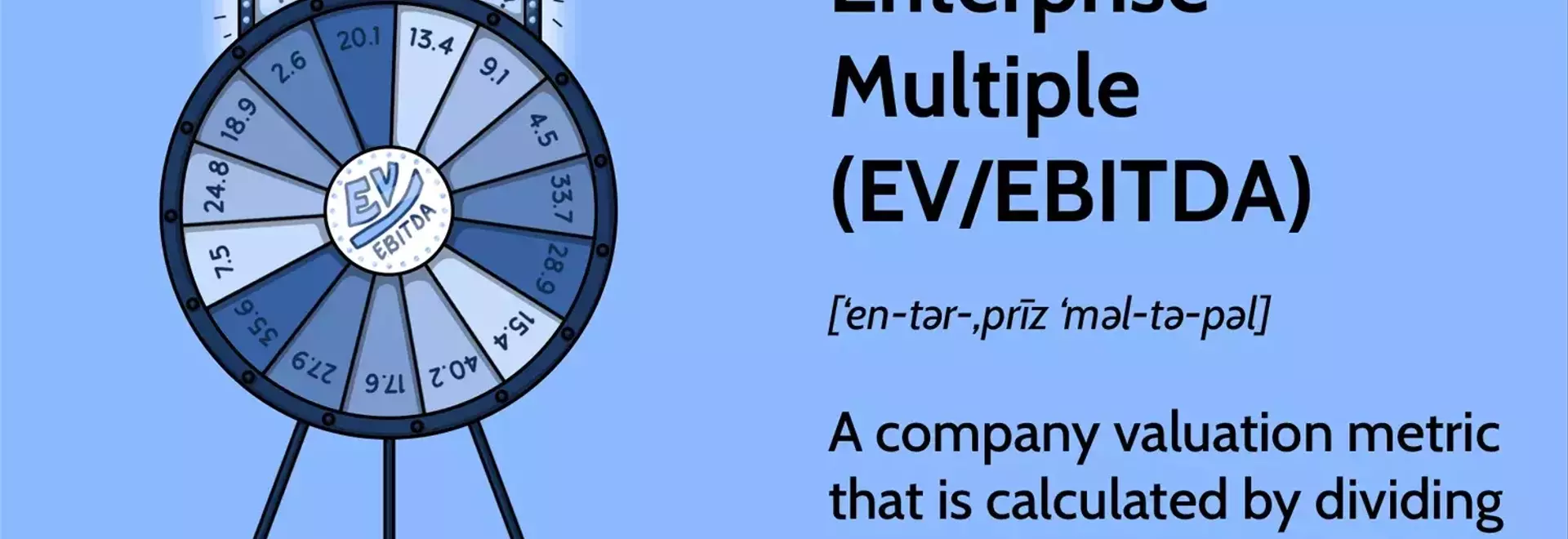
Understanding the Enterprise Multiple (EV/EBITDA) in Financial Analysis
The Enterprise Multiple (EV/EBITDA) serves as a vital financial indicator for assessing a company's total value. This ratio integrates a company's debt alongside its earnings before interest, taxes, depreciation, and amortization (EBITDA), offering a holistic perspective on its economic worth. It's particularly instrumental for potential acquirers, as it reflects the debt obligations they would assume and the cash assets they would acquire. The utility of the enterprise multiple is highly context-dependent, varying significantly across industries; for instance, high-growth sectors like biotechnology may exhibit higher multiples compared to more mature industries such as rail transportation.
The Enterprise Multiple (EV/EBITDA) is determined by dividing the Enterprise Value (EV) by EBITDA. Enterprise Value encompasses market capitalization, total debt, and subtracts cash and cash equivalents. EBITDA, on the other hand, represents earnings before accounting for interest, taxes, depreciation, and amortization. This formula provides a standardized approach to valuing companies, enabling fair comparisons irrespective of their capital structures or tax environments.
Analyzing the enterprise multiple offers crucial insights into a company's valuation. A lower multiple relative to its industry peers or historical averages might signal undervaluation, presenting a potential buying opportunity. Conversely, a higher multiple could suggest that a company is overvalued. This metric is also invaluable for identifying attractive acquisition targets, as it provides a more accurate representation of a company's economic value for merger and acquisition (M&A) purposes than market capitalization alone, by factoring in both debt and available cash.
However, investors must exercise caution to avoid "value traps." A seemingly low enterprise multiple might not always indicate an undervalued asset but could instead reflect fundamental weaknesses within the company or its industry that preclude future growth or recovery. Therefore, a thorough understanding of the company's and industry's underlying fundamentals is paramount to accurately assessing its true value.
For example, in the year ending January 28, 2022, Dollar General reported an EBITDA of $3.86 billion. With a market capitalization of $56.2 billion, total debt of $14.25 billion, and cash and cash equivalents totaling $344.8 million as of April 4, 2022, its enterprise multiple was calculated to be approximately 18.2. This marked an increase from the previous year's multiple of 17.4, primarily attributable to a significant reduction in cash and a modest decrease in EBITDA. This illustration underscores how the Enterprise Multiple effectively integrates a company's cash position and debt into its valuation.
Ultimately, while the Enterprise Multiple is a powerful tool for financial analysis and identifying acquisition targets, its application requires a nuanced understanding of market dynamics and company-specific factors. Investors should look beyond simple numerical comparisons and delve into the qualitative aspects of a business and its industry. Understanding the core drivers of a company's performance and the broader industry trends is crucial to discern whether a given enterprise multiple truly reflects an opportunity or a potential risk.