Understanding Business Backlogs: Impact and Examples
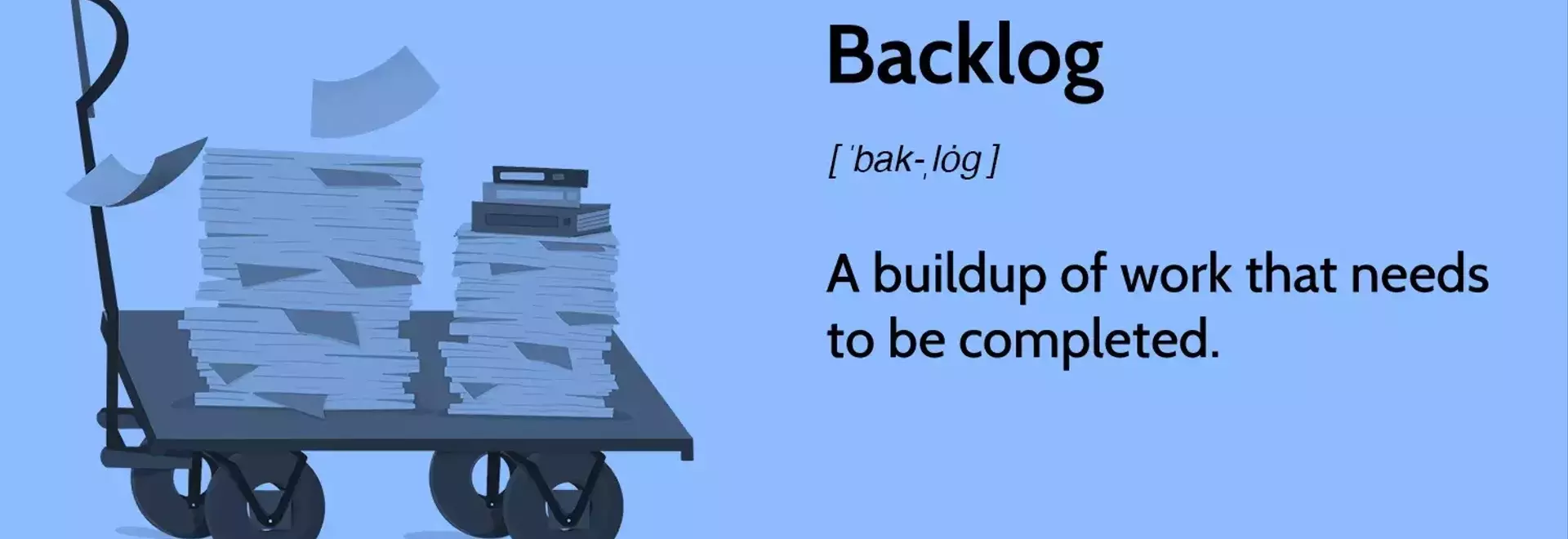
A backlog signifies an accumulation of unfulfilled tasks or orders, a common phenomenon in various business sectors, from accounting to finance. This situation can have profound implications for a company's financial health and operational efficiency. While a burgeoning backlog might suggest robust market demand for a company's offerings, it could simultaneously reveal a deficit in its production capabilities. Conversely, a diminishing backlog might imply either enhanced operational efficiency or a decline in market interest for its products or services.
Detailed Analysis of Business Backlogs and Their Ramifications
In the dynamic realm of commerce, a backlog refers to the outstanding volume of work or customer orders that are yet to be processed or delivered. This term is frequently encountered in financial reporting and accounting, where it can encompass anything from unexecuted sales orders to a substantial pile of loan applications awaiting review. The existence of a considerable backlog can cast a long shadow over public companies, directly influencing shareholder perception and future earnings projections.
A backlog acts as a crucial indicator of a company's operational state. For instance, a prolonged and expanding backlog might signal that a company is struggling to keep pace with an overwhelming demand, hinting at potential production bottlenecks or resource constraints. On the other hand, it can also be interpreted positively, suggesting an extraordinary popularity of the company's products or services that far outstrips its current supply capacity. This dual interpretation underscores the importance of a nuanced understanding when analyzing backlog data.
For sectors such as construction or manufacturing, backlogs are a clear indication of a workload surpassing the available production capacity. These industries, by their very nature, often encounter periods where project demands surge beyond their immediate ability to execute. While a growing backlog usually corresponds with increasing sales figures, businesses generally strive to minimize it to avoid perceptions of inefficiency or potential customer dissatisfaction due to delays. A reduction in backlog could either denote a decrease in market demand or a marked improvement in the company's production efficiency. Unexpected backlogs, in particular, can severely disrupt established forecasts and production timelines, leading to operational challenges.
Furthermore, the concept of a backlog extends to companies operating on a subscription model, such as Software-as-a-Service (SaaS) providers. In these cases, a backlog isn't necessarily due to a failure in meeting immediate demand but rather pertains to services scheduled for future delivery under existing contracts. This means the time for the actual performance of the service has not yet arrived, creating a backlog of future obligations.
Illustrative Example: The Case of a T-shirt Printing Business
Consider a hypothetical scenario involving a company specializing in custom-printed T-shirts. This company possesses the infrastructure to produce 1,000 T-shirts daily, a figure that typically aligns with its average daily order volume. However, upon the launch of a new, highly sought-after T-shirt design, particularly popular among university students, daily orders suddenly double to 2,000. Despite this surge, the company's production capacity remains static at 1,000 units per day. Consequently, the backlog of unfulfilled orders escalates by 1,000 T-shirts each day until the company successfully scales up its production to match the heightened demand.
Real-World Backlog Scenarios in Prominent Industries
The tech giant Apple (AAPL) experienced a notable backlog following the October 2017 launch of its iPhone X. The overwhelming consumer demand for this new device resulted in significant pre-order backlogs, compelling Apple to defer shipment dates from November to December. This situation drew criticism regarding Apple's sales forecasting capabilities, reminiscent of similar issues encountered during the Apple Watch's debut in 2015.
Another impactful instance of a backlog emerged during the 2008 housing crisis. Lenders found themselves with a massive inventory of foreclosed residential properties that needed to be liquidated. The rate at which homes entered foreclosure far exceeded the lenders' capacity to process these cases promptly. This unprecedented backlog often allowed delinquent homeowners to inhabit their properties for several years without making mortgage payments. The recovery of the housing market gained significant momentum only after a substantial portion of these foreclosure backlogs was successfully cleared.
Reflections on the Strategic Importance of Backlog Management
The concept of a backlog, far from being a mere accounting term, embodies a critical tension within business operations: the balance between market demand and operational capacity. As evidenced by the examples of Apple's product launches and the systemic issues during the housing crisis, how a company manages its backlog can profoundly affect its market reputation, financial stability, and long-term growth trajectory. For businesses, mastering the art of backlog management is not just about fulfilling orders; it's about strategically leveraging periods of high demand while simultaneously identifying and addressing any underlying inefficiencies in production or service delivery. This proactive approach ensures sustainable growth and helps in maintaining customer satisfaction in a competitive landscape. Understanding and effectively responding to backlogs is a hallmark of resilient and forward-thinking enterprises.