President Trump to Attend Supreme Court Hearing on Birthright Citizenship
In a historic move, President Donald Trump is scheduled to attend Wednesday's Supreme Court session, where arguments will be heard regarding birthright citizenship. This marks a significant precedent as no other sitting U.S. president has previously observed oral arguments before the nation's highest court. The case at hand involves an appeal by the Trump administration against a lower court's ruling that overturned an executive order seeking to alter the application of birthright citizenship, a policy with roots in the 14th Amendment.
The executive order, signed by President Trump at the commencement of his second term, asserted that children born within the United States to parents residing in the country without legal documentation or on a temporary basis would not be granted American citizenship. This directive diverged significantly from the long-established interpretation of the 14th Amendment and federal statutes enacted since 1940, which generally confer citizenship upon all individuals born on American soil, with very limited exceptions. This legal challenge underscores a broader effort by the Trump administration to reform immigration policies.
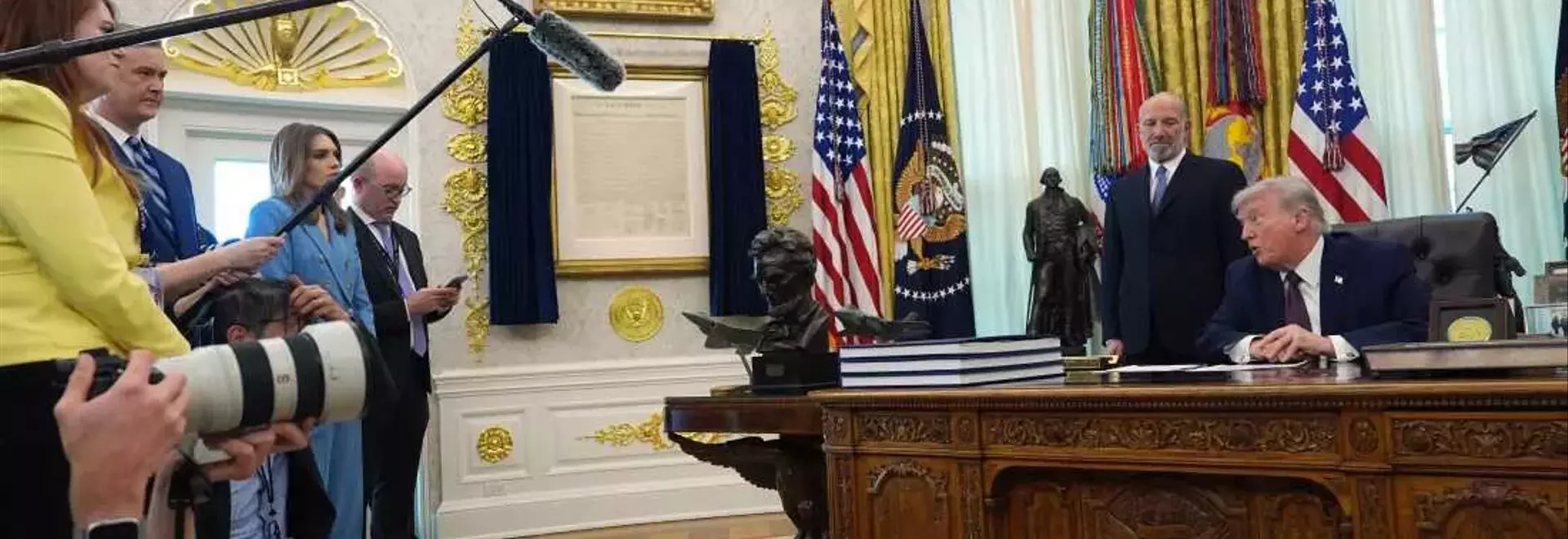
Previously, President Trump had contemplated attending a Supreme Court hearing last year concerning the legality of his administration's tariffs. However, he ultimately decided against it, citing concerns that his presence would create a diversion. This time, his resolve to attend appears firm. During discussions with reporters in the Oval Office on Tuesday, he confirmed his intention to be present for the birthright citizenship arguments, reiterating his plan to attend in person.
While President Trump did attend the ceremonial swearing-in of Justice Neil Gorsuch during his first term, and later appointed two additional justices, Brett Kavanaugh and Amy Coney Barrett, his direct engagement with the court's oral arguments as a sitting president is unprecedented. Past presidents have had varied interactions with the judiciary, with figures like Richard Nixon arguing cases before his presidency and William Howard Taft serving as Chief Justice after his tenure in the White House. Trump's current stance on the judiciary, as he expressed, suggests a perception of partisan divisions among the justices.
The administration's measures to limit citizenship are a component of its wider agenda on immigration control. These restrictions have yet to be implemented across the country, as multiple courts have previously blocked them. The Supreme Court's definitive judgment on this pivotal case is anticipated by early summer, with its outcome poised to have far-reaching implications for immigration law and constitutional interpretation.
President Trump's decision to personally attend this Supreme Court hearing highlights the profound significance he places on the birthright citizenship debate and his administration's immigration policies. His physical presence is not merely ceremonial but underscores the executive branch's direct engagement with a judicial process that could redefine fundamental aspects of American citizenship. The anticipated ruling will undoubtedly be a landmark decision with lasting impacts on the nation's legal and social landscape, shaping the future of immigration and national identity.