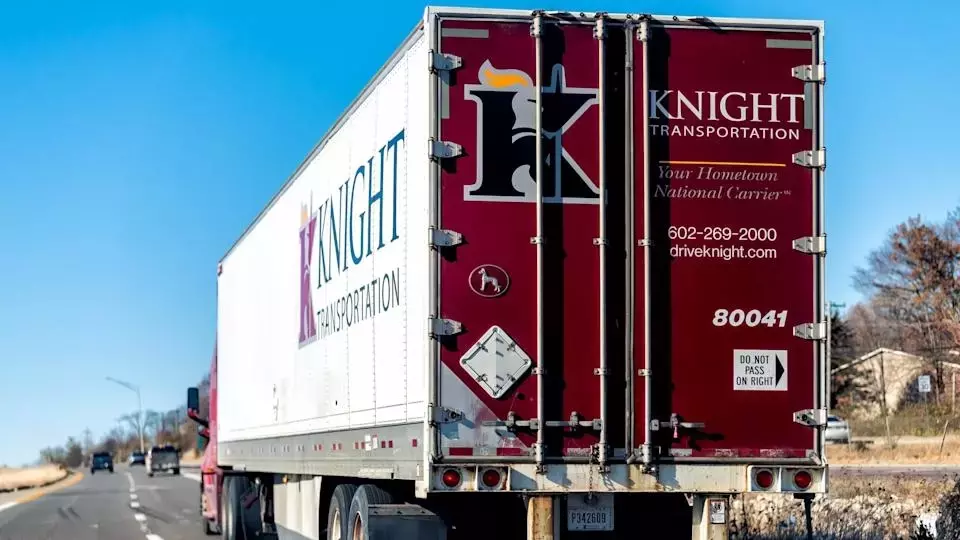
Knight-Swift Sees Strong Demand, Anticipates Rate Hikes
Knight-Swift Transportation is navigating a dynamic freight market, signaling a shift towards higher contractual rates as supply constraints intensify. The company anticipates substantial rate hikes in the near future, driven by a combination of stricter regulatory enforcement, surging fuel costs, and a market emerging from a prolonged downturn. These factors are compelling shippers to proactively secure capacity, indicating a significant realignment within the transportation sector. Despite a reported net loss in the first quarter, Knight-Swift remains optimistic about its financial trajectory, projecting improved operational metrics and profitability across its key segments.
The current market conditions, characterized by reduced capacity and increased demand, underscore a broader transformation in the logistics landscape. Knight-Swift's strategic adjustments, including fleet optimization and operational improvements, are positioning the company to capitalize on these shifts. The emphasis on securing long-term contracts and improving operational ratios reflects a proactive approach to mitigating market volatility and enhancing shareholder value. As the industry grapples with evolving economic and regulatory environments, Knight-Swift's outlook provides a crucial insight into the future of freight transportation.
Market Shifts and Strategic Adjustments
Knight-Swift Transportation is observing a notable hardening of the freight market, leading to expectations of substantial increases in contractual rates. This shift is primarily attributed to a confluence of factors, including stringent regulatory oversight that is pushing non-compliant operators out of the market, and a significant rise in fuel prices. These dynamics are severely limiting the available capacity, even without a dramatic surge in demand, forcing shippers to seek more stable and scalable solutions from established asset-based carriers. CEO Adam Miller highlighted an increase in mini-bid activity, signaling that existing routing guides are proving insufficient. Furthermore, some carriers are rescinding recently negotiated rates, prompting clients to lock in capacity for the upcoming peak season, a clear indicator of market tightening. The company projects high-single-digit to low-double-digit rate increases on the majority of its remaining contracts, following mid-single-digit gains earlier in the year.
Miller emphasized that the current pressure on capacity, largely stemming from regulatory actions rather than traditional economic cycles, is unprecedented. He anticipates a more significant reduction in network capacity than typically seen, which could serve as a powerful catalyst for robust bidding seasons this year and next. This scenario positions Knight-Swift advantageously, allowing them to command higher rates and improve profitability. The company's strategic decision to optimize its fleet by reducing tractor count, particularly within the acquired U.S. Xpress division, has already started yielding results, with improved asset utilization and revenue per tractor. This proactive management of assets and capacity, coupled with the favorable market conditions, is expected to drive strong financial performance and reinforce Knight-Swift's leadership in the transportation sector.
Financial Performance and Segment Outlook
For the first quarter, Knight-Swift reported a headline net loss of $1.3 million, or 1 cent per share. However, adjusted earnings per share (EPS) stood at 9 cents, aligning with a negative earnings revision provided by the company the previous week, although it fell short of analysts' initial expectations of 25 cents. Several non-recurring items impacted the adjusted EPS, including an 8-cent charge from a negative less-than-truckload claim development, 5 to 6 cents due to adverse weather and fuel costs, and 2 cents from an unfavorable value-added tax ruling in Mexico. These headwinds were partially offset by an $8 million reduction in net interest expense. Despite these challenges, the company reiterated its second-quarter adjusted EPS guidance range of 45 to 49 cents, indicating confidence in an imminent recovery and improved financial health.
Across its segments, Knight-Swift demonstrated resilience and strategic adjustments. Truckload revenue remained stable year-over-year at $1.05 billion, excluding fuel surcharges, benefiting from a 4% increase in revenue per tractor despite a similar decline in the number of active tractors. The adjusted operating ratio (OR) for the truckload segment slightly worsened to 96.3%, primarily due to weather and fuel costs. The LTL segment, while facing higher operating costs from acquisition integrations and terminal growth, saw its adjusted OR at 99.6%, exacerbated by the claim development headwind. However, the freight mix is improving, with weight per shipment reaching its highest level since 2021, and a low-90s OR is projected for the second quarter. The brokerage unit experienced a 19% decrease in load count as the company focused on screening against non-compliant carriers, yet a 10% increase in revenue per load helped mitigate revenue decline. The intermodal unit, despite an initial operating loss, is expected to achieve breakeven or better results in the second quarter, with load count projected to increase by high-single to low-double digits. These segment-specific improvements are crucial to the company's overall financial recovery and growth prospects.